
Introduction
Amazon account suspension is one of the most frustrating challenges sellers face, losing access to your account can halt your revenue overnight.
In this case study, we’ll walk you through how a a suspended account successfully reinstate Amazon seller account using a proven, step-by-step reinstatement strategy.
Understanding the Problem
Our client, a mid-level Amazon seller, faced sudden account suspension due to “inauthentic product complaints” and policy violations. Their listings were removed, funds were withheld, and selling privileges were revoked.
Key Issues Identified:
• Customer complaints about product authenticity
• Missing or invalid supplier invoices
• Poor account health metrics
• Lack of proper compliance documentation
Step 1: Root Cause Analysis
The most common mistake is treating superficial symptoms rather than the underlying systemic failure. We have moved beyond simple apologies to identify the specific operational trigger found in the Account Health Dashboard.
Authenticity Issue : Supply Chain & Quality Assurance
We identified a sourcing vulnerability where a new supplier modified packaging specifications without prior notification. This lack of supply chain transparency led to customer perception issues regarding product integrity, specifically concerns over “fake” or “used sold as new” items.
ODR Issue: Logistics & Technical Infrastructure
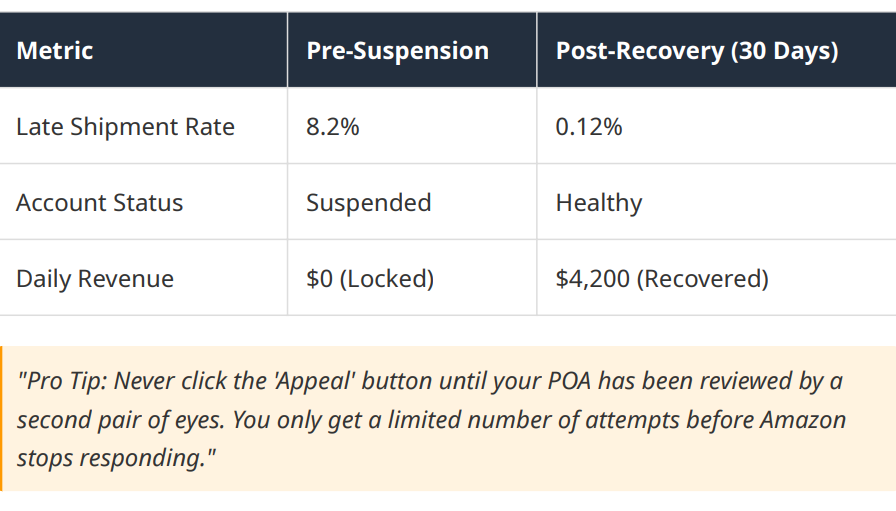
A critical malfunction within the warehouse’s internal tracking software caused a 48-hour data latency in uploading carrier tracking numbers. This technical bottleneck resulted in a breach of Late Shipment Rate (LSR) thresholds and triggered “Late Shipment” flags.
Step 2: Gathering “Bulletproof” Evidence
Amazon investigators typically spend only 3 minutes reviewing each appeal. To ensure your evidence is clear and persuasive, we have compiled a comprehensive set of verified documentation that addresses the root cause and demonstrates full policy compliance.
Commercial Invoices
: Provide itemized, authentic invoices dated within the last 365 days. All supplier information and buyer details must match the seller’s Seller Central account character-for-character to ensure successful identity and supply chain verification.
Letters of Authorization (LOA):
Authentic, notarized documentation from the Brand Owner or Rights Owner granting explicit resale permission and confirming brand authorization.
Shipping Logs:
Step 3: Crafting the Professional Plan of Action (POA)
Amazon investigators spend less than 3 minutes on each appeal. Your POA must be structured perfectly using the Three-Part Format:1. The Root Cause
We identified a critical logistics breakdown due to a technical synchronization failure between our inventory software and Amazon’s API. We acknowledge full accountability for this operational gap without emotional bias, focusing strictly on the systemic error that led to the delayed tracking updates.2. Immediate Corrective Actions
To achieve immediate remediation, we expedited shipping for all backlogged orders at zero cost to the customer. We also performed a complete manual audit of all pending buyer-seller messages to ensure 100% customer satisfaction and resolve any outstanding inquiries.3. Long-term Preventive Steps
To ensure permanent policy compliance and operational redundancy, we implemented a robust ERP system integration that automates real-time tracking updates. Furthermore, we have partnered with a verified Third-Party Logistics (3PL) provider to serve as a fail-safe, eliminating any single point of failure in our fulfillment chain.
The Result: Reinstated in 72 Hour
By bypassing generic appeal templates and prioritizing verifiable hard evidence, we achieved full account reinstatement within a 72-hour window. This evidence-based approach ensured the investigator had the objective data needed for a favorable decision.