

Introduction
What is an Amazon Policy Violation?
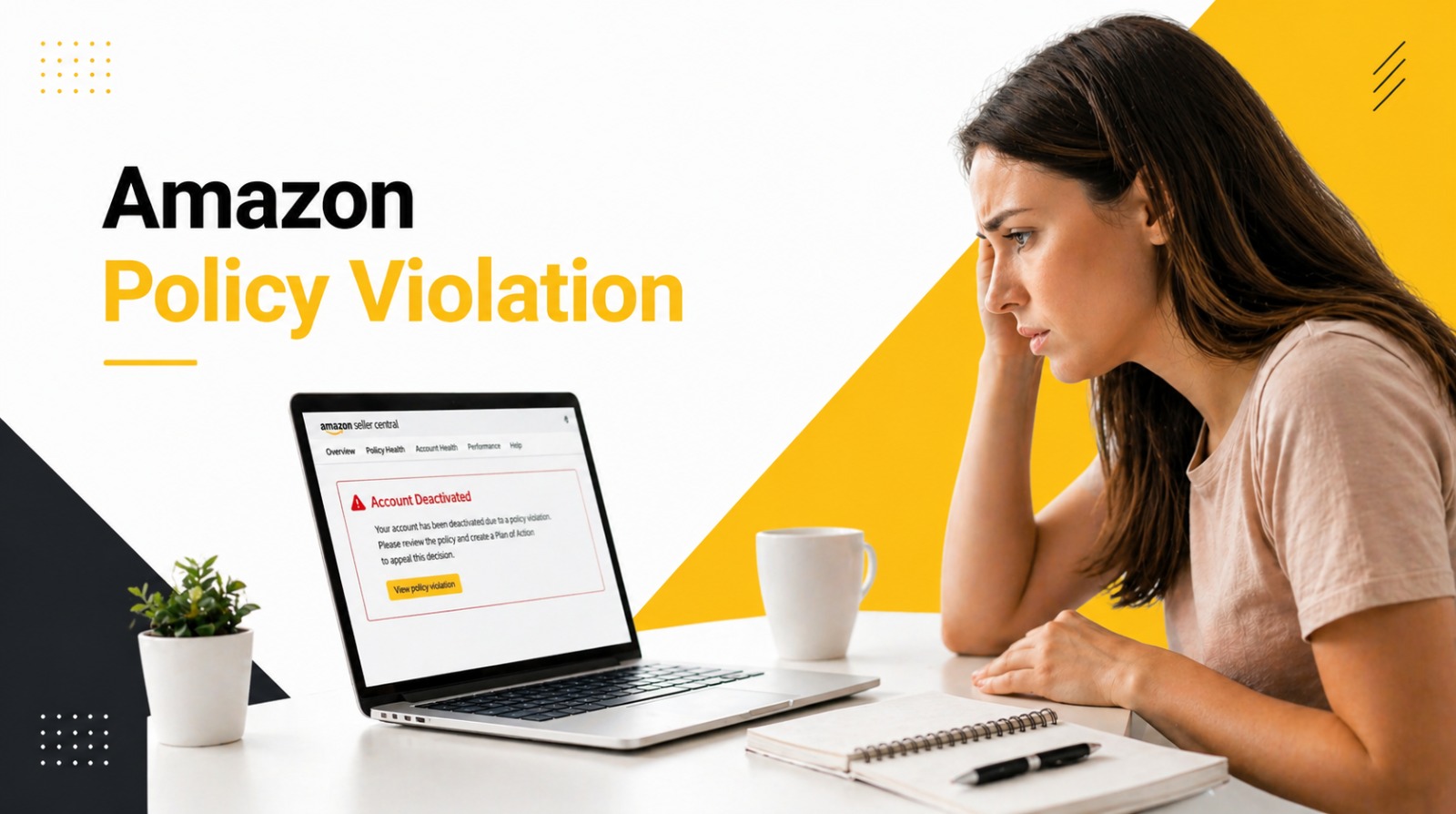
An Amazon Policy Violation happens when your listing or account does not follow Amazon rules. These rules are designed to protect customers and maintain trust. Listing policy violations occur when titles, descriptions, or images do not meet Amazon guidelines. Misleading claims and keyword stuffing are common causes. Most violations occur due to simple errors. Sellers often add incorrect product details or make exaggerated claims. You can find violations in your Account Health Dashboard. This section shows warnings, suppressed listings, and performance issues. The first step is to identify the root cause. Never guess the issue, and always rely on Amazon’s message. The time depends on the type of violation. Minor issues are often resolved within one or two days. To stay safe, always follow Amazon guidelines carefully. Use accurate product information and avoid making false claims. Ignoring an Amazon Policy Violation can damage your business. Your listings may lose visibility, and your sales can drop quickly. Managing an Amazon Policy Violation is a normal part of selling on Amazon. What matters is how quickly and correctly you respond. It is a warning or action taken when your listing or account breaks Amazon rules. You need to identify the issue, fix it, and submit a clear Plan of Action with proof. Yes, serious violations like counterfeit products can lead to suspension. Yes, invoices are often required to prove product authenticity. Yes, suppressed listings lose ranking and visibility, which reduces sales.
Even a small mistake in your listing can trigger a violation, so accuracy is very important.
Common Types of Violations
Intellectual property complaints happen when you use someone else’s brand name, images, or content without permission.
Product authenticity issues arise when Amazon cannot verify your product source. This is a serious violation.
Restricted product violations occur when you sell items that need approval or are banned.
Safety complaints happen when a product may harm customers or lacks proper certification.Main Reasons Behind Violations
In many cases, missing invoices or working with unreliable suppliers also leads to issues.
Another common reason is ignoring updates in Amazon policies, which change frequently.How to Identify a Violation
Always read Amazon’s notification carefully. Understanding the exact problem is the first step toward fixing it.
How to Fix Amazon Policy Violation
Once you understand the problem, fix your listing or account issue immediately. Update content, remove incorrect claims, and ensure compliance.
After that, gather all necessary documents such as invoices or supplier details. These documents must be clear and valid.
Next, write a strong Plan of Action. It should clearly explain the cause of the issue, what you fixed, and how you will prevent it in the future.
Finally, submit your appeal through Seller Central. Keep your tone professional and your explanation simple.How Long Does It Take to Remove Violations
More complex cases may take several days, while serious violations can take longer. Regular monitoring helps speed up the process.How to Avoid Future Violations
Work with trusted suppliers and keep all your documents ready. Staying updated with Amazon policies is also very important.
Why Fixing Violations Quickly Matters
In serious cases, your account may get suspended, which can be difficult to recover.
Conclusion
If you stay careful, follow the rules, and act fast, you can protect your account and grow your business safely.FAQ Section
What is an Amazon Policy Violation?
How can I fix an Amazon Policy Violation quickly?
Can one violation suspend my account?
Do I need invoices for appeals?
Do violations affect sales?